
Sudanese revolution
- Columns

The Significance of the US Ambassador’s Arrival in Khartoum
Muawad Mustafa Rashid According to a media notice issued by the Public Diplomacy Section of the Embassy of the United States of America in Khartoum, Ambassador John Godfrey, the first US Ambassador to Sudan in nearly 25 years, arrived in Khartoum. The notice added “As a senior representative of the US Government, Ambassador Godfrey will work to strengthen relations between the American and Sudanese people and to support their aspirations to freedom, justice, and a…
- Columns
Political Will: The Vision and the Tool
Dr. Elshafie Khidir Saeid The Sudanese political arena is almost fully saturated with many initiatives that claim they can appropriately address the current crisis in the country. But, when one looks at the reactions to these initiatives and takes note of the atmosphere in which they were launched, she/ or he may say, with confidence, that none of these initiatives can succeed. The reason why they cannot reach success can be attributed to many factors…
- Columns

Why Repeating the Same Mistakes?
Omer B. Abu Haraz Two countries in Africa have a lot of similarities with Sudan in different aspects except one. They have stable system of governance since their independence from the British colonization. Kenya and Tanzania. Both got their independence on almost the same date as Sudan’s independence from British rule. The three countries share wide ethnic diversities, numerous tribes, high levels of illiteracy, and low levels of awareness. All of those shared similarities are…
- Columns
It is Not an Impossible Mission
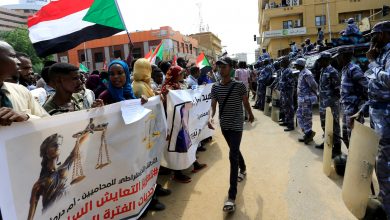
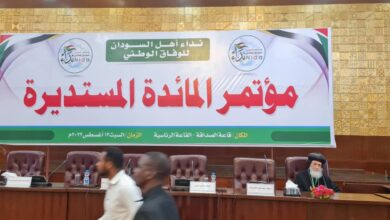
Osman Mirghani The workshop organized by the Sudanese Bar Association over the constitutional framework came out with specific recommendations for the completion of the transitional period. Last week, the Forces of Freedom and Change (National Accord) said that it completed 4 documents to complete the institutions and missions of the transitional period. Sheikh El-Tayeb Al-Jid concluded its roundtable conference and came out with recommendations to accomplish the transitional period. The Forces of Freed and Change…
- Breaking News
Sovereignty Council VP Receives the Prosecutor of the International Criminal Court
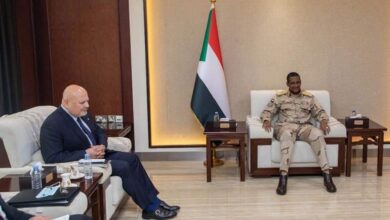
Staff Writer Khartoum 23/08/2022 – The Vice-President of the Transitional Sovereignty Council, Lieutenant-General Mohamed Hamdandeglo, received in his office today, the Prosecutor of the International Criminal Court, Karim Khan, in the presence of the Minister of Justice in charge, Maulana Muhammad Saeed Al-Hilu. He was briefed, by the Public Prosecutor of the Criminal Court, about his visit and the accompanying delegation to Sudan, the meetings he held with officials in Khartoum and Darfur, as well as…
- Columns
No to Targeting the National Army
Mohamed Saad Kamel The Sudanese army was established in 1925 and some of its battalions participated in WWII. The Sudanese army has its combat doctrine based on defending the homeland and preserving its sovereignty and national unity, besides its considerable role in providing services to civilians during natural disasters and maintaining security when required in cases of confusion and turmoil. The officers and soldiers of the Sudanese army are highly respected within the Sudanese societies…
- Columns
Gold in Sudan: Facts and Figures
Dr. Yassir M. Alobaid Sudan is characterized by a wide diversity in the rocky infrastructure as well as the tectonic structure. Accordingly, the geology of Sudan is divided in terms of rock formation into sedimentary rocks, which consist of the Nubian sandstone group and the sediments of Umm Rawaa, which is a formation of great economic importance and contains a large stock of hydrocarbons and industrial minerals. And the base rocks cover large areas of…
- Columns
National Reconciliation Initiatives in Sudan
Dr. Elshafie Khidir Saeid Almost all the political initiatives that have been launched since the 25th of October 2021 coup declare that their main goal is to resolve the Sudanese crisis and achieve a national reconciliation and national consensus in Sudan. Although the majority of these initiatives are stating clearly that their approach to resolving the Sudanese crisis is to walk through the path of civil democratic transformation and to address the political and social…
- Columns
The Roundtable Conference: Will It Pay-Off?
Al-Sammani Awadallah The Roundtable of Sudanese People’s Call for Reconciliation Initiative; led by Sheikh El-Tayeb Al-Jid kicked off last Saturday with the participation of several political forces and other trends. The conference was boycotted by some recognized political forces on top of which are the Forces of Freedom and Change and the Resistance Committees. Al-Jid sent invitations to all the political parties to participate in the initiative to reach a political agreement over running the…
- Columns
Trojan Horse!
Muawad Mustafa Rashid The so-called (Sudanese People’s Call for National Reconciliation) launched by the Sheikh of a Sufi Order, El-Tayeb Al-Jid, is facing several internal and external challenges, especially after most of the social, political, and youth sectors agreed that the initiative represents a political incubator for the ousted regime. This means that the initiative is isolated from the forces of the revolution as the latter do not want to retract and accept the return…