
Columns
-
The Iranian War and Its Potential Repercussions on Sudan
Face the Truth | Ibrahim Shaglawi Tehran appears to be waging a war across multiple arenas and phases, guided by calculations of deterrence, psychological balance, and strategic rhythm management. Historically, Iran tends toward what can be described as a “controlled war” without sliding into full-scale conflict—that is, delivering calculated strikes that demonstrate capability while keeping the door to negotiation slightly ajar. The media escalation accompanying the military operations reflects a parallel battle over global public…
-
Gulf War 2_X: Explosions, Escalation, and Future Scenarios
By: Dr. Al-Rashid Mohammed IbrahimMa’alim Center for International Political Relations Studies – SudanIntroduction: The Lifecycle of CrisesWars and crises follow a lifecycle: explosion, escalation, and peak, followed by a de-escalation toward peace or a new status quo. While previous U.S.-Israeli confrontations with Iran were limited (e.g., the “12-Day War”), the current conflict is far more complex. Its military, economic, and political dimensions are tied to Global Energy Security and Food Supply Chains. Notably, four of…
-
Sudan’s Resilience and the Engineering of the Middle East
The Face of Truth | Ibrahim Shaglawi Yesterday, the U.S. military strike against Iran and the subsequent Iranian missile and drone attacks on Israel and American bases marked the beginning of a new phase in the Middle East—one that may redraw the maps of influence. The region is entering a phase of forced re-engineering, where the resilience of states and their ability to protect their interests are being tested, while major powers rearrange their cards…
-
Gulf War: Objectives, Fallacies, and Outcomes
By: Dr. Alrasheed Mohamed Ibrahim Director of the Center for International Political Relations Studies (MAALIM)IntroductionThe current version of the Gulf War—pitting the United States and Israel against Iran—does not merely follow the historical context of conflicts in the Arabian Gulf. Despite the density of American and Western interests and the diversity of Israeli security threats, this war is distinguished by its timing. It follows regional shifts that nearly established a new security framework making Iran…
-
From the Village of Mistereih to Europe’s Body: How the West Lights Sudan’s Wars and Walks Away from the Ashes
The attack on Mistereih is not an isolated incident but part of a broader project to dismantle Darfur’s social fabric and turn the region into an open platform for mercenaries and war economies, threatening Sudan, its neighbours, the continent, and ultimately Europe itself.
-

Intersection of Interests and Ambitions… A Stumbling Block Preventing the Classification of the RSF Militia as a “Terrorist Organization”!
The rebel Rapid Support Forces (RSF) militia has committed, during the ongoing war of atrocities in Sudan, a series of crimes that constitute a flagrant violation of international law. Organized waves of violence have been described as rising to the level of crimes against humanity and war crimes, according to repeated statements from the American and British foreign ministries, the United Nations, the UN Security Council, and the African Union.
-
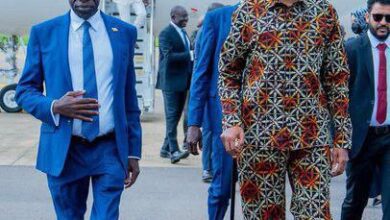
Hemedti’s Speech: The Delusion of an Ignorant, Defeated, and Distressed Leader!!
It is clear that Hemedti’s speech in Kampala carried contradictory messages and a state of "desperate defense" of his narrative and existence. Several fundamental observations can be extracted:
-
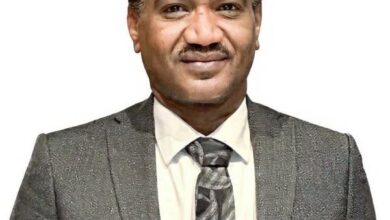
Hemedti… Foolish Confessions and a Fabricated Appearance
Ultimately, Hemedti’s recent speech was nothing more than a blend of unintended confessions, intellectual contradictions, and failed attempts at repositioning. What was meant to be a show of strength turned into a self-indictment of atrocities and a testament to the militia’s erosion. While wars may drag on, the state and its institutions remain the decisive factor, for history proves that while conflicts fade, only states endure.
-
Inspired by the UN Report… Militia Crimes in the Scales of Justice
Released on February 13, 2026, the Human Rights Commission report, spanning twenty-nine pages, is titled "They were shooting us like animals." The title is quoted from the testimony of one of the female survivors whose statements were heard. The report, prepared by the Office of the High Commissioner for Human Rights (OHCHR) based on field visits and the interrogation of 140 witnesses, including victims and survivors, carried shocking and documented information regarding the crimes of…
-
Summary of the African Union Statement on Sudan
The following key elements further highlight the political and strategic importance of the statement: 1. Recognition of the legitimacy of the transitional government headed by General Abdel Fattah al-Burhan, strengthening its regional standing. 2. Reaffirmation of Sudan’s unity, sovereignty, and territorial integrity within its internationally recognized borders. 3. Firm rejection of any parallel governments or entities, considering them a threat to state unity. 4. An urgent call for a ceasefire and humanitarian truce to pave…