
Sudan
- News
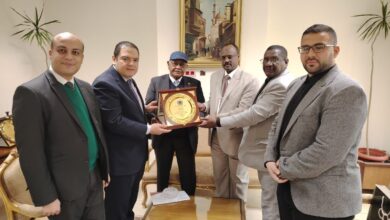
Inauguration of the “Shams” Egyptian-Sudanese Media Network: Building Bridges to Enrich Relations Between Peoples
Brown Land Media is a fundamental tool and pillar in strengthening relations between peoples, not only as a transmitter of news but as a creator of public opinion and a bridge for cultural and civilizational communication. Media can be a tool for rapprochement or a cause for divergence, depending on the method of treatment and handling of issues. Therefore, adherence to a responsible media discourse that focuses on commonalities and stays away from sensationalism or…
- Opinion
The Red Notice: When International Justice Pursues War Criminals
By Dr. Ismail Al-HakimI was profoundly heartened to read Interpol’s decision regarding Abdelrahim Dagalo and others. The issuance of a Red Notice is not merely a procedural event in international police records; it is a momentous development carrying deep legal, political, and moral implications. When names are added to international wanted lists, it transcends local accusations to become a global declaration that these individuals are fugitives from justice, and that the crimes attributed to them…
- Columns
Iran’s War Reaches the Sudanese Depth…
The Face of Truth | Ibrahim Shaglawi The escalation of confrontation between Iran, the United States, and Israel in the Gulf has not stopped at the limits of military conflict; rather, its reverberating waves have begun to extend toward the depth of the entire region, and Sudan is not immune to this accelerating movement within an environment of severe security and economic tension and sensitivity. The nature of the overlap between the geopolitics of the…
- Columns
The Iranian War and Its Potential Repercussions on Sudan
Face the Truth | Ibrahim Shaglawi Tehran appears to be waging a war across multiple arenas and phases, guided by calculations of deterrence, psychological balance, and strategic rhythm management. Historically, Iran tends toward what can be described as a “controlled war” without sliding into full-scale conflict—that is, delivering calculated strikes that demonstrate capability while keeping the door to negotiation slightly ajar. The media escalation accompanying the military operations reflects a parallel battle over global public…
- Columns
Gulf War 2_X: Explosions, Escalation, and Future Scenarios
By: Dr. Al-Rashid Mohammed IbrahimMa’alim Center for International Political Relations Studies – SudanIntroduction: The Lifecycle of CrisesWars and crises follow a lifecycle: explosion, escalation, and peak, followed by a de-escalation toward peace or a new status quo. While previous U.S.-Israeli confrontations with Iran were limited (e.g., the “12-Day War”), the current conflict is far more complex. Its military, economic, and political dimensions are tied to Global Energy Security and Food Supply Chains. Notably, four of…
- Reports
Tehran and Khartoum: Future Scenarios
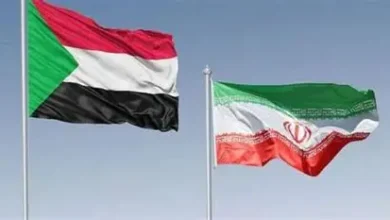
By: Samia Ibrahim – BrownlandHistorically, Sudanese-Iranian relations have experienced sharp fluctuations, ranging from strategic alliances to complete severance. After a seven-year hiatus, the two nations restored diplomatic ties in 2023. Under the current conflict, this rapprochement has evolved toward strengthening Iran’s military and economic influence in Sudan, driven by intersecting interests and geopolitical goals.Strategic Alliance and the “Inqaz” EraDuring the era of former President Omar al-Bashir’s “Inqaz” regime, experts note that Khartoum and Tehran maintained…
- Opinion
Dismantling Republics and Political Systems: Iran and Sudan Under the Spotlight
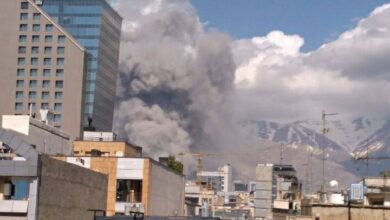
Report by: Badreldeen Abdelrahman | Special – Brown Land It is no longer a secret that the conflict engulfing the entire Middle East region traces back to a Western plan aimed primarily at dismantling powerful republics and fragmenting political systems. This is pursued through multiple tools, most notably destabilizing states from within — sabotaging them politically and economically — and then weakening their military and security power centers, particularly those linked to advanced weapons manufacturing…
- Columns
Sudan’s Resilience and the Engineering of the Middle East
The Face of Truth | Ibrahim Shaglawi Yesterday, the U.S. military strike against Iran and the subsequent Iranian missile and drone attacks on Israel and American bases marked the beginning of a new phase in the Middle East—one that may redraw the maps of influence. The region is entering a phase of forced re-engineering, where the resilience of states and their ability to protect their interests are being tested, while major powers rearrange their cards…
- Reports
Report | Interpol Travel Restrictions on Abdul Rahim Dagalo and a Broader International Crackdown on Militia Leadership
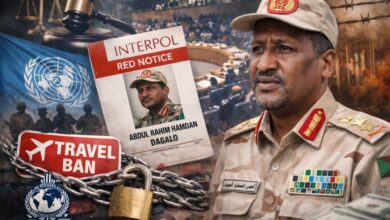
Report | Interpol Travel Restrictions on Abdul Rahim Dagalo and a Broader International Crackdown on Militia Leadership The file of Abdul Rahim Hamdan Dagalo, Deputy Commander of the Rapid Support Forces, has entered a more advanced phase of coordinated international enforcement, following the activation of measures through INTERPOL in implementation of sanctions imposed by the United Nations Security Council under Resolution 1591 (2005) concerning Sudan.In practical terms, these steps result in severe restrictions on international…
- Reports

Intersection of Interests and Ambitions: A Stumbling Block to Designating the RSF as a “Terrorist Organization” (Part 2)
Exclusive: BrownlandReport by: Badr al-Din AbdulrahmanThe issue of the failure to designate the rebel Rapid Support Forces (RSF) militia as a “terrorist organization” requires intensive advocacy. This effort must expose the profound imbalance that has dealt a fatal blow to the scale of international justice, as it has become a political tool serving only to implement international and regional agendas for the strongest—an escalation of the concept of “political thuggery” protected by law. While this…